Now I know why there are so few women Product Managers
Although I graduated in Chemical Engineering, I shifted to the digital segment. I love what I do as a Product Manager and everything I’ve learned, but it has definitely not been easy.
My first experience on digital was at Tricae, a baby goods e-commerce business. I started as a marketing analyst, and the whole concept was new to me. Performance Marketing was complex, and I had a lot of technical requirements that made me spend hours studying after work. The technical details were as complicated as talking to the technology team. I remember that sometimes it was harder to deal with those guys than to learn all technical requirements!
One day, however, things started to change my perspective after a woman assume as one of the CEOs - that was a reflection of the investors’ desire to have a woman in the board due to the clients’ profile, that is, momies. When she joined the team, I could notice how hard it was for her to embrace the leadership of the company, and gain respect of the team and the others directors. I developed an empathy with her challenges and all of her courage, until one day, she came up to talk with me and asked me to read Sheryl Sandberg’s book Lean In. That’s when I began to recognize the problem I would face for the next years: the sexism in our environment was real.
On my next career path, at Monashees, I didn’t have to deal with software engineers directly, but with CEOs and C-levels of portfolio companies. And again, the sexism was present and made me ask myself why women are not as present as men in technology companies’ leadership.
I had the opportunity to meet CEOs and C-levels from different companies. At one point, I decided to analyse portfolio companies’ leaderships to see how divergent the scenario of men versus women as leaders was: at C-level positions women represented 22% and less than 2% of CEOs or Founders.
After almost 2 years, I decided to work again in a startup. I joined Resultados Digitais’ team as the first female Product Manager, representing less than 10% of women in the product team.
Not being a software engineer was the most difficult barrier to break. It was part of my role to get the confidence of the engineers in my team. Some guys from tech were sometimes overconfident and very often drifted towards an over inflated belief in their point of view. There were situations when they laughed at me after a question about software operation. It was usual situations where men called me bossy or aggressive when my answer was tougher.
So I did not cry or ran away. I decided to make the difference. I worked so hard, studying every day, even when everybody was planning to spend the day at the beach - yes, I live in Florianópolis, in a house where I have the beach right after my yard.

- My place at Florianópolis
I realised that if I put my heart and soul in that, and deliver the best job ever, I would conquer the respect as a product person.
Furthermore, I started studying software engineering. And the first step was to learn to code. I started an online course of python to understand the technical implications of the software. And for every doubt, I asked the team, no matter how stupid I would appear.
The second step was to become closer to the engineers. Every daily or planning meeting I tried to get more involved in their jobs, until they noticed that my perspective was very important to the software development.
The turning point for me was at RD Summit, the main event of Sales and Marketing on Latin America promoted by Resultados Digitais. All product updates and launches were announced by the CEO during the event.
I had the opportunity to release a very relevant product - a brand new email marketing editor for more than seven thousand customers. The product represented a new experience to customers in terms of productivity gains and usability.
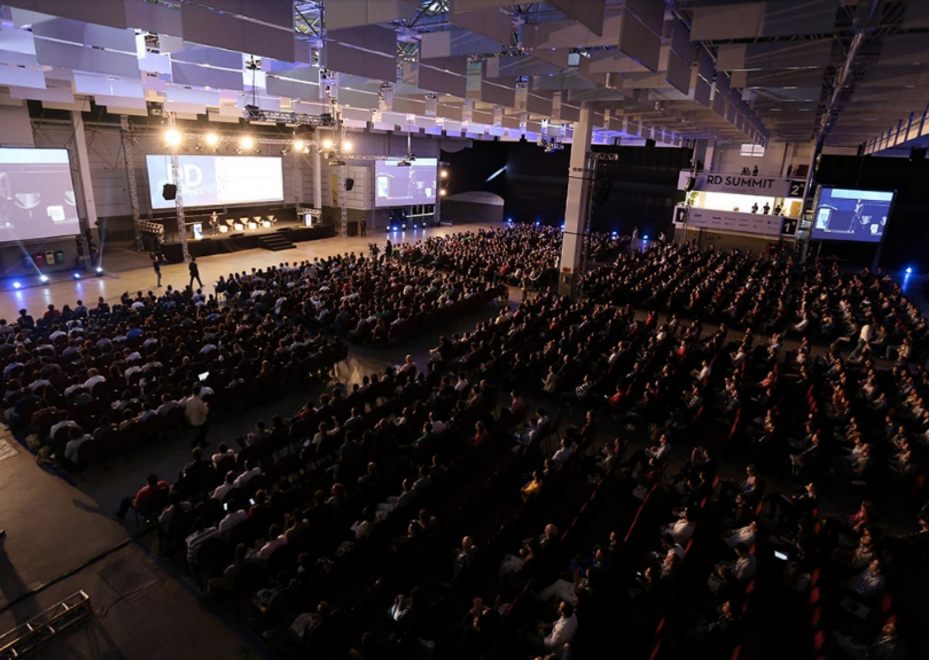 * RD Summit 2016
From there I felt confident that I was capable of being a respectable Product Manager, and tackle my weakness of not being graduated in computer science or related courses. Engineers started listening to me carefully at meetings, and asked my opinion on several subjects regarding their jobs. It was a huge improvement!
Not only the engineers, but other people inside the company started to ask my feedback and help: customer success managers requested my help to solve clients’ issues, people came up to talk with me about the Product Manager role, etc.
So after all of this trajectory, I can clearly understand why there are so few women in a Product Management role. In my perspective, part of the problem is the job description itself. Several times I felt I wasn’t qualified for the job.
For example, it was common to require four or five years of technology industry experience to assume the product manager role - I thought “Oh God, I will never be accepted!”. And asking male friends, from tech segment about the role, many of them would apply with just one year of experience.
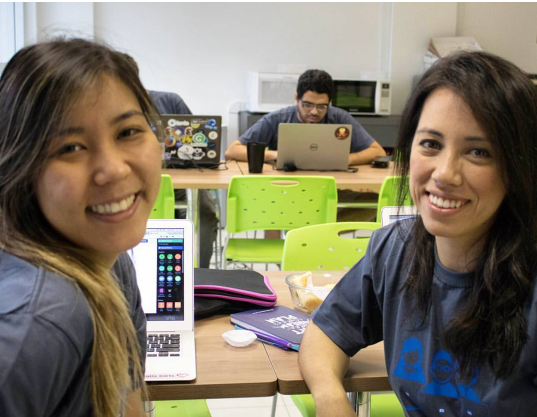 * Hackathon at Resultados Digitais
People may say I’m overreacting. But, I found myself with the impostor syndrome a lot of times. Now I know I can make a difference. And I feel responsible in changing this scenario. Many women, with a high potential to be Product Managers never thought about taking on this role. For now, part of my challenge as a product person is to help other women think about this career path.
Women as Product Managers can make a huge difference defining the vision of the product. What amazing innovations, apps or solutions to the world’s issues are we missing just because we’re not encouraging women?